How to Start Reformer Pilates Safely and Strong
Learn how to start reformer pilates safely with smart setup, precise form, and steady progression for strength, control, and calm confidence from day one.
The first few minutes on a Reformer can feel surprisingly unfamiliar: a moving carriage beneath you, springs creating resistance, straps in your hands and a footbar waiting to be adjusted. That is exactly why learning to start reformer pilates safely is less about pushing hard and more about creating control from your first repetition. You do not need to arrive flexible, strong, or experienced. You do need to be willing to move with attention.
Reformer Pilates is low impact, but it is not passive. The springs can challenge deep stabilising muscles, expose uneven movement patterns, and make small changes in alignment feel significant. A considered beginning helps you build strength, balance, posture, and confidence without rushing past the foundations that make the method so effective.
Start Reformer Pilates Safely With the Right Class
Your first class should give you time to learn the equipment and the language of the movements. A dedicated beginner session is not a lighter version of a more advanced workout. It is where you learn how to set the carriage, use the footbar, manage the straps, and understand what controlled resistance should feel like in your body.
At Reformer Club, the START class is designed for this stage. The pace supports learning while still giving you a focused, full-body training session. Expect clear direction around setup, breath, range of motion, and form. These details are not an obstacle to the workout. They are the workout.
Avoid choosing a high-intensity class simply because you are already fit in another discipline. Running, strength training, cycling, yoga, and Reformer Pilates all ask different things of the body. General fitness will help, but it does not automatically teach you how to stabilise a moving carriage or maintain tension through a slow, precise sequence. Starting at the appropriate level allows your strength to transfer safely.
Arrive Ready to Move With Control
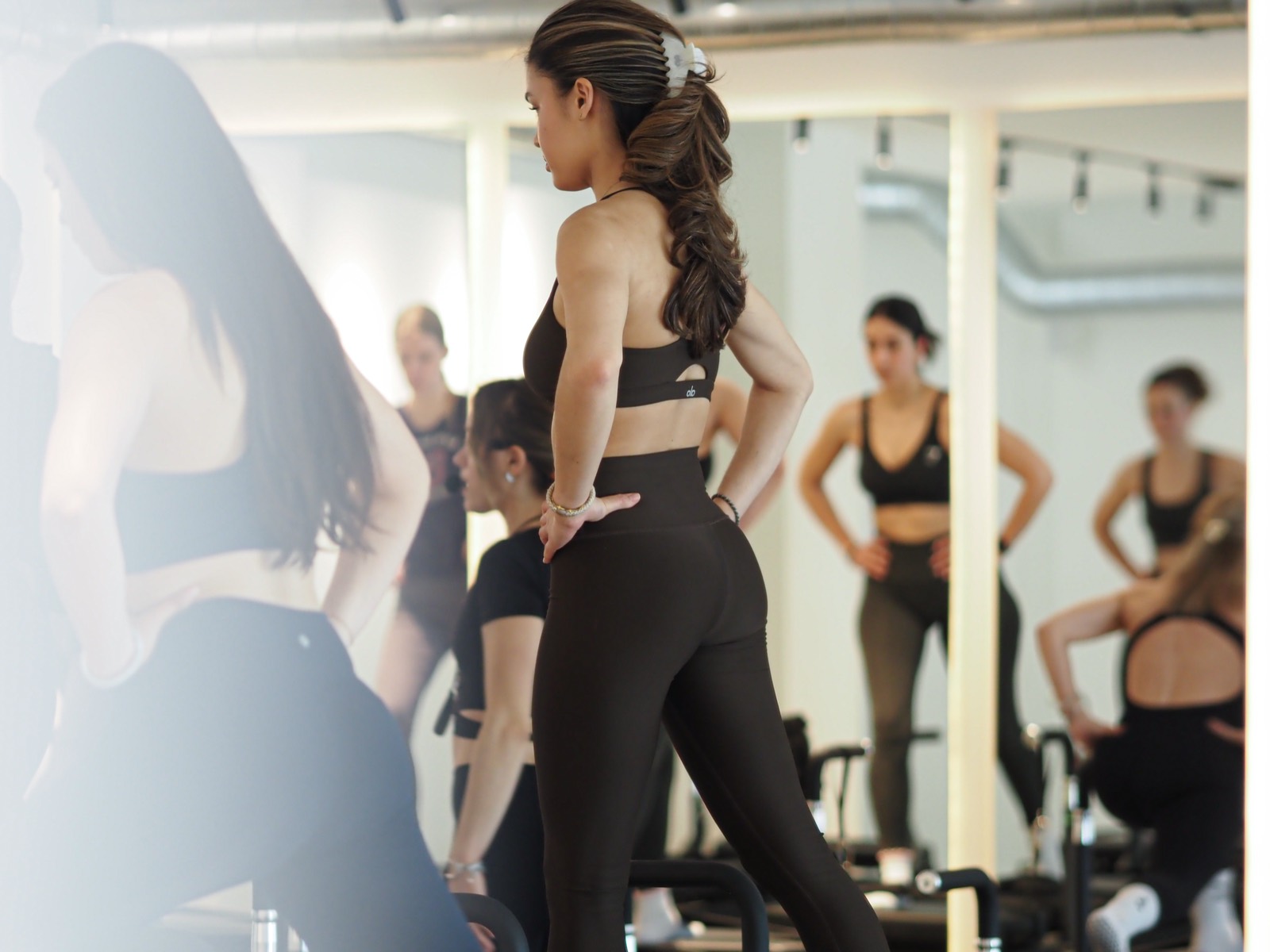
Wear clothing that lets you see and feel your alignment. Close-fitting activewear is practical because fabric will not catch in straps or obscure the position of your knees, hips, and spine. Grip socks are essential for traction and hygiene. Jewellery that may catch on straps is best left off.
Aim to arrive a little early for your first session. Rushing in late can make it harder to hear the safety briefing or communicate what your body needs that day. Tell the instructor if you are new to Reformers, returning after a break, pregnant, recovering from injury, or managing pain, dizziness, osteoporosis, joint instability, or another health concern. This is useful information, not an apology.
If you have an acute injury, unexplained pain, or have been advised to modify exercise, speak with a qualified healthcare professional before training. Pilates can often be adapted, but the right choice depends on your condition, symptoms, and stage of recovery. A group class is not the place to test whether pain will disappear if you work through it.
Eat, hydrate, and set realistic expectations
A heavy meal immediately before class can make spinal flexion, rotation, and supported inversions uncomfortable. A light snack and normal hydration usually work better. More importantly, release the expectation that every workout must leave you exhausted. Your first Reformer sessions may feel deeply challenging in subtle ways: shaking legs in a bridge, a strong abdominal connection during tabletop, or the mental effort of coordinating breath with movement.
That concentration is productive. Slow Resistance Training asks you to stay present under tension rather than chase speed. You may leave feeling more switched on than wiped out - and that is a strong start.
Learn the Equipment Before You Add Intensity
A Reformer is safe when it is adjusted correctly and used with care. Your instructor will show you the setup, but these principles are worth remembering.
First, never change spring settings, move the footbar, or adjust straps without instruction, particularly while the carriage is under tension. Springs are not simply a measure of difficulty. Heavier resistance can offer more stability in some movements, while lighter resistance can demand more control. The safest setting is the one selected for the exercise, your level, and your body - not the one that sounds most impressive.
Second, control the carriage all the way home. Do not let it slam into the stopper after a repetition. The return phase is where much of the strength work happens, and it protects the equipment as well as your joints.
Third, enter and leave the Reformer deliberately. Keep the carriage still, place your feet securely, and follow the instructor's cue before standing up. Fast transitions are unnecessary. Precision is always more valuable than rushing to the next exercise.
Form Comes Before Range
The most common beginner mistake is trying to make every shape bigger. A deeper lunge, a higher leg lift, or a wider chest opening can look like progress, but only if you can maintain alignment and control.
Begin with the range that lets you keep your ribs connected rather than flaring, your shoulders away from your ears, and your pelvis stable when the exercise calls for it. In a footwork sequence, that may mean tracking your knees in line with your toes rather than pressing the carriage out as far as possible. In straps, it may mean moving your arms through a smaller arc so your neck stays relaxed and your shoulders remain supported.
Your instructor may use cues that feel very specific: soften the ribs, lengthen through the crown of the head, press evenly through both feet, or keep the carriage quiet. These are not cosmetic corrections. They help distribute load more intelligently so one area is not doing all the work.
Use breath as a check-in
Breath gives immediate feedback. If you are holding it, clenching your jaw, or bracing so hard that you cannot speak a short sentence, reduce the range, slow the tempo, or ask for guidance. Controlled effort should feel demanding, not panicked.
There is no single breathing pattern that suits every exercise or every person. Follow the instruction for the sequence, then prioritise a steady breath over forcing a perfect rhythm. As your coordination improves, breath can help you find more abdominal support, smoother movement, and greater focus.
Know the Difference Between Effort and Warning Signs
Reformer Pilates can create muscular heat, fatigue, trembling, and a strong sense of work. Those sensations can be normal, especially when you are building endurance in smaller stabilising muscles. Sharp pain, pinching, numbness, tingling, dizziness, or pain that worsens with each repetition are different. Stop and tell your instructor.
Do not compare your range, spring setting, or pace with the person on the Reformer beside you. Bodies arrive with different histories, proportions, mobility, injuries, and training experience. The most advanced choice is often a deliberate modification that allows you to maintain form.
A useful rule is simple: discomfort from muscular effort should ease when the set ends. Joint pain or nerve-like sensations should not be ignored in the hope that they will become productive. Speak up early. A small adjustment to foot position, headrest, spring tension, or exercise variation can change the entire experience.
Progress Through Consistency, Not Pressure
The safest way to become stronger on the Reformer is to repeat the foundations often enough that they become familiar. Two sessions a week can be an excellent rhythm for many beginners, with walking, mobility work, or other training around it depending on your recovery and schedule. One session a week can still build confidence, but progress may feel slower because the movements take longer to become automatic.
Give yourself several beginner sessions before judging whether Pilates is for you. Early classes involve learning a new environment as much as training your body. Once you can set up calmly, recognise key cues, and hold alignment under tension, moving into a more challenging class becomes a natural progression rather than a leap.
Sleep, stress, and other exercise matter too. If your legs are heavily fatigued after a long run or strength session, choose a lighter range and communicate it. If you feel energised, resist the urge to skip the fundamentals. Sustainable progress comes from meeting your body where it is, then asking for a little more when it is ready.
Come as you are, take the time to learn the method, and let control lead the way. The goal is not to conquer the Reformer in one class. It is to leave each session more focused, strong, and balanced than when you arrived.