Basel Boutique Fitness Guide for Better Training
Use this Basel boutique fitness guide to choose a focused, low-impact training routine that builds strength, posture, balance and lasting control daily.
A good workout should leave you feeling worked, not worn down. That is the standard behind this Basel boutique fitness guide: finding training that asks more of your muscles and attention without asking your joints to absorb unnecessary impact. For busy professionals, regular movers and complete beginners alike, the right studio is less about following a trend and more about building a routine you can return to.
Boutique fitness can be a powerful part of that routine. But the experience varies widely. Some studios prioritise pace and sweat. Others focus on technique, progression and the kind of strength that supports how you move long after class ends. Knowing what you want from your training makes the choice much clearer.
What boutique fitness should give you
A boutique studio is not defined by dim lighting, premium interiors or a smaller room alone. Its real value is a more intentional training experience: clear coaching, considered programming, equipment that serves a purpose and a class environment where you are not anonymous.
That matters when consistency is the goal. If every session feels disconnected from the last, it is difficult to recognise progress. If the class is so intense that recovery becomes a problem, motivation often follows. A strong boutique offering creates a middle ground: challenging enough to demand focus, structured enough to build confidence, and adaptable enough to meet you where you are.
Look for training that develops more than one visible outcome. A stronger core may be the reason you begin, but improved posture, stability, coordination and body awareness are what make the work valuable beyond the studio. The best sessions leave you with a clearer sense of control in your body.
A Basel boutique fitness guide to choosing well
Before booking, consider what you need from the hour itself. There is no single right format. It depends on your current fitness level, your injury history, how much impact you enjoy and the way training needs to fit around work, travel and life.
Choose a method, not just a mood
High-energy formats can be motivating, especially if you enjoy music, pace and a social push. They may be a good fit when you want cardiovascular conditioning or thrive in a fast environment. Yet high intensity is not the only route to a demanding workout.
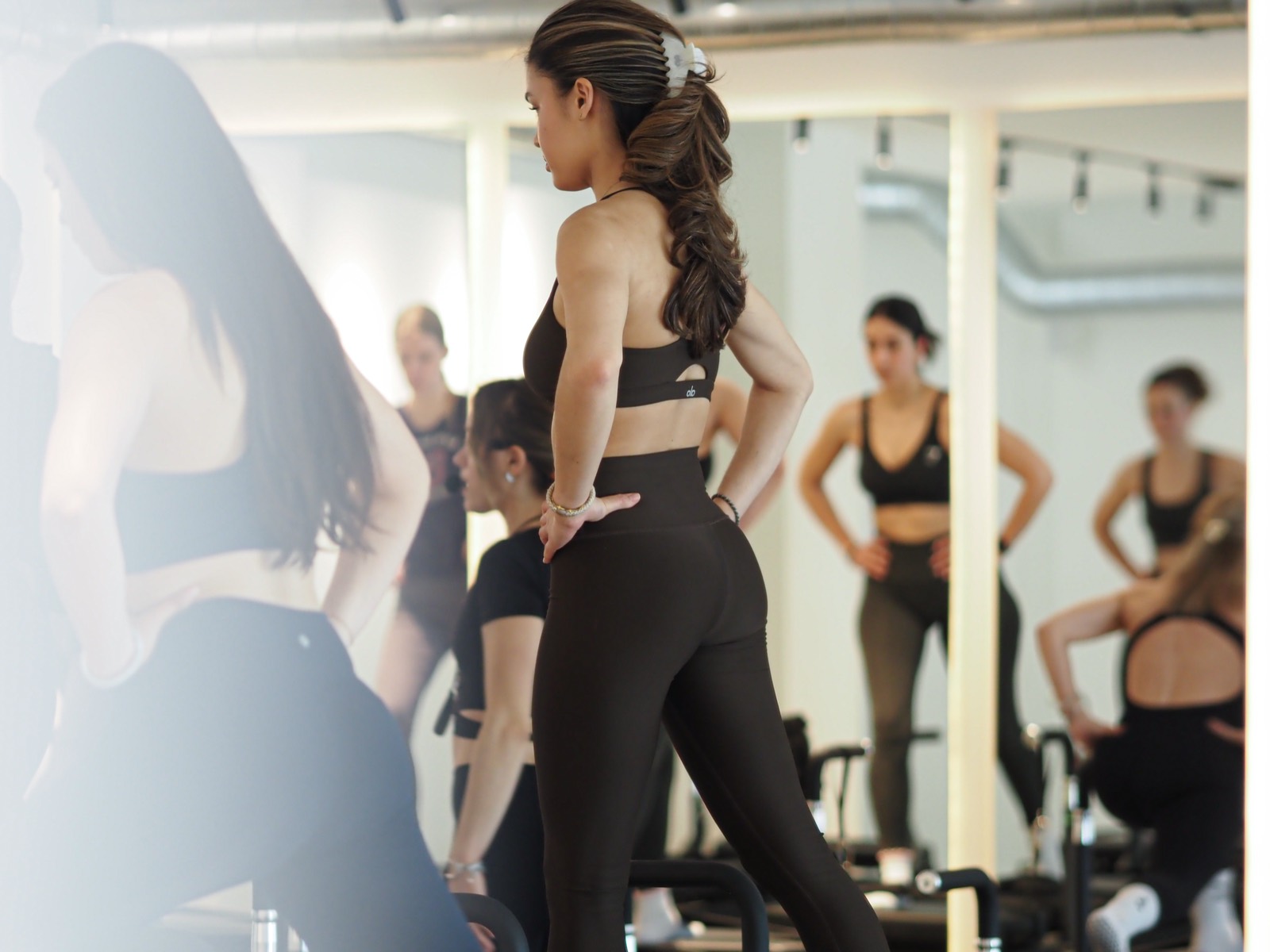
Resistance-based Reformer training takes a different approach. Through springs, carriage movement and deliberate positioning, it creates challenge with control. The work can look measured from the outside, but time under tension, precise range and sustained muscular effort can be deeply demanding. For people who want to train hard while limiting repetitive impact, that distinction is meaningful.
Slow Resistance Training, or SRT, is built around this principle. Instead of rushing through repetitions, you work with tension, endurance and form. The pace gives you time to notice alignment, recruit the intended muscles and make small adjustments that change the quality of an exercise. It is a focused way to develop strength without treating every session like a test of exhaustion.
Look for a real pathway into progression
A class should not make beginners feel like they need to keep up before they have learned the basics. Equally, experienced clients should not be left repeating the same easy sequence week after week. A studio with clear levels makes both experiences better.
At Reformer Club, the progression is designed to be easy to understand. START introduces the foundations of Reformer training, with attention to setup, control and form. SIGNATURE builds on that base through more complex resistance work and longer muscular effort. BURN is for those ready to sustain a higher level of challenge, endurance and intensity while maintaining precision.
This kind of structure is not about labelling one level as better than another. It gives your training direction. Beginning with control is often the quickest way to earn more range, resistance and confidence later. Moving up when your form is ready is a stronger measure of progress than simply choosing the hardest class on the schedule.
Pay attention to coaching cues
In boutique fitness, instruction changes the session. The difference between a movement that feels awkward and one that feels effective is often a simple adjustment: where you place your weight, how you organise your ribs, when you exhale or how far you move.
Good coaches give clear cues without overwhelming the room. They help you understand the purpose of the exercise, offer options when needed and encourage intensity without sacrificing control. You should feel supported to work at your edge, not pressured to ignore pain or force a range that does not belong to your body.
For Reformer Pilates in particular, this attention matters. Springs add resistance and feedback, but they also require intention. A thoughtful instructor helps you use the machine as a training tool rather than relying on momentum.
Make low impact work challenging enough
Low impact does not mean low effort. It means the training method reduces repetitive pounding and abrupt loading, which can be useful for people balancing a demanding work schedule, returning to exercise or complementing running and other sports.
The trade-off is that controlled work asks for patience. You may not always get the instant rush associated with an all-out interval session. Instead, you may notice a deep muscular fatigue, stronger balance and a greater ability to hold quality under pressure. These are not lesser results. They are the foundation for movement that feels capable and composed.
To keep low-impact training effective, look for variation in resistance, tempo, position and duration. Your body needs enough stimulus to adapt. A well-designed Reformer class can create that stimulus through single-leg work, core stability, loaded upper-body patterns and sustained sequences that challenge endurance without unnecessary joint stress.
Build a routine that survives a busy week
The perfect plan is not the one with the most sessions. It is the one you can keep. For many people, two consistent classes per week create more progress than an ambitious plan that disappears after ten days.
Start by choosing class times that work with your actual calendar, not an ideal version of it. Morning training can establish a focused tone before work, while an evening class may help you move out of a desk-bound day. Both can work. The better option is the one you will protect consistently.
If you are new to structured exercise, give yourself four to six weeks before judging the method. Early sessions are often about learning the equipment, finding your range and understanding how to create tension without holding your breath. As these details become familiar, the workout becomes more fluid and the progress more visible.
Recovery belongs in the routine too. Walking, mobility work, sleep and enough protein all support the strength you are building. If you also run, cycle, lift weights or play sport, Reformer training can complement those activities by developing stability and control. The exact balance depends on your recovery capacity and goals, so leave room to adjust rather than treating every training week as fixed.
The feeling to look for after class
You do not need to leave every session completely depleted to know it worked. A more useful signal is feeling challenged, upright and connected to your body. Your muscles should have had to work. Your mind should have had to focus. But you should also feel able to return.
That is the appeal of a considered boutique fitness routine in Basel: training can be both refined and demanding. Come as you are, choose the level that meets you honestly, and leave more focused, strong and balanced than when you arrived.